
Free Printables For Parents To Give Kids About Self Harm
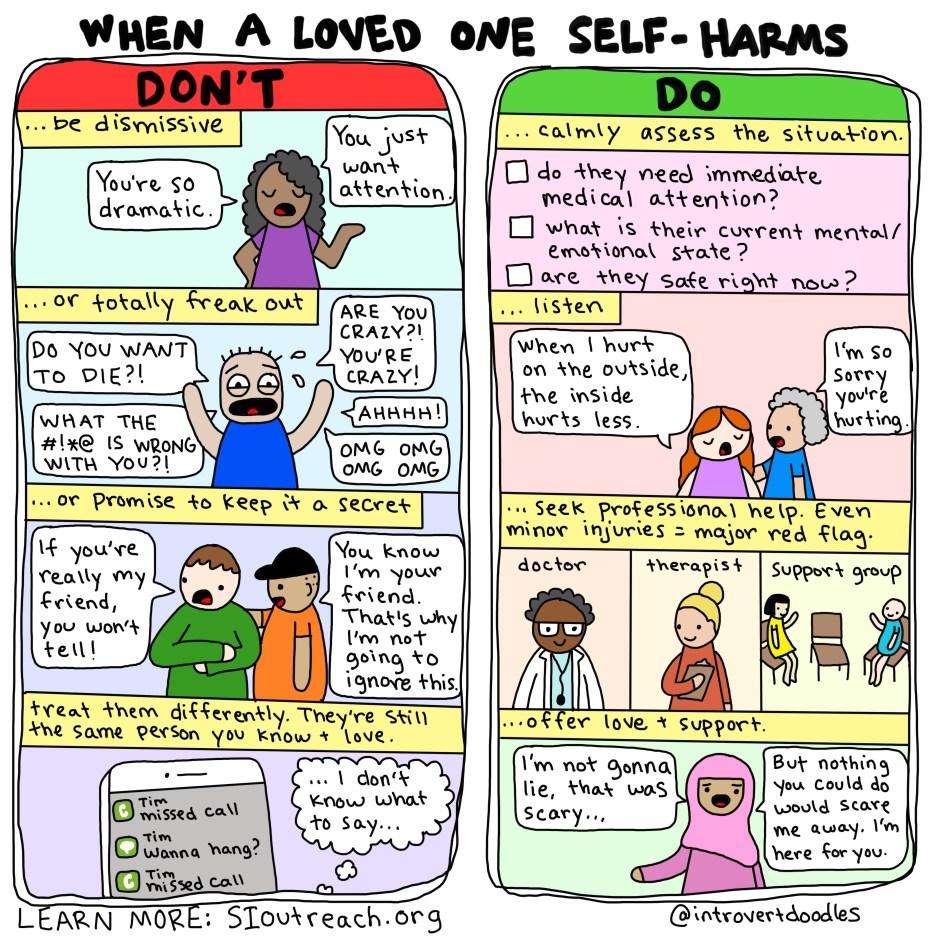
Free Printables For Parents To Give Kids About Self Harm - If you're worried about your child or finding things as a parent hard, you may find some of the resources below helpful. You might be worried that a young person is harming themselves, even if they're not. Resources developed by kids helpline counsellors on how to support students to navigate suicide and depression. Free to download and share in the classroom, home or community. This guide will give you advice on how to approach this difficult and upsetting situation. The following recommendations can help to prevent suicidal thinking and behaviors (brock &. On this page, we outline how you can support your child and where you can find professional help. Unexplained cuts, burns or bruises. Download the guide for free. Parents should be proactive and directly address the factors that increase the risk of suicide. Unexplained cuts, burns or bruises. This handout gives guidance for ways to support your child at this time. Resources developed by kids helpline counsellors on how to support students to navigate suicide and depression. On this page, we outline how you can support your child and where you can find professional help. The person needs to find a less harmful way of coping. Parents should be proactive and directly address the factors that increase the risk of suicide. Some of the most common triggers are: If you are worried, watch out for these signs: • feeling overwhelmed • feeling angry • feeling sad and alone • extreme anxiety. You might be worried that a young person is harming themselves, even if they're not. Unexplained cuts, burns or bruises. This guide will give you advice on how to approach this difficult and upsetting situation. The purpose is not to condone or encourage you to hurt yourself, but to help you to stay. You might be worried that a young person is harming themselves, even if they're not. • feeling overwhelmed • feeling angry •. This guide will give you advice on how to approach this difficult and upsetting situation. You might be worried that a young person is harming themselves, even if they're not. Unexplained cuts, burns or bruises. Some of the most common triggers are: Resources developed by kids helpline counsellors on how to support students to navigate suicide and depression. On this page, we outline how you can support your child and where you can find professional help. Unexplained cuts, burns or bruises. The following recommendations can help to prevent suicidal thinking and behaviors (brock &. If you're worried about your child or finding things as a parent hard, you may find some of the resources below helpful. This guide. The following recommendations can help to prevent suicidal thinking and behaviors (brock &. If you're worried about your child or finding things as a parent hard, you may find some of the resources below helpful. You might be worried that a young person is harming themselves, even if they're not. While you may feel shocked and overwhelmed by the discovery. Unexplained cuts, burns or bruises. You might be worried that a young person is harming themselves, even if they're not. Resources developed by kids helpline counsellors on how to support students to navigate suicide and depression. Like other parent guides in this series, this tool provides knowledge,. The following recommendations can help to prevent suicidal thinking and behaviors (brock &. Free to download and share in the classroom, home or community. The following recommendations can help to prevent suicidal thinking and behaviors (brock &. The person needs to find a less harmful way of coping. Like other parent guides in this series, this tool provides knowledge,. If you're worried about your child or finding things as a parent hard, you. On this page, we outline how you can support your child and where you can find professional help. Remember, you can always text 'shout' to 85258 for support if you or. The following recommendations can help to prevent suicidal thinking and behaviors (brock &. Free to download and share in the classroom, home or community. Unexplained cuts, burns or bruises. If you are worried, watch out for these signs: On this page, we outline how you can support your child and where you can find professional help. • feeling overwhelmed • feeling angry • feeling sad and alone • extreme anxiety. Free to download and share in the classroom, home or community. This handout gives guidance for ways to support. The following recommendations can help to prevent suicidal thinking and behaviors (brock &. Free to download and share in the classroom, home or community. This handout gives guidance for ways to support your child at this time. The person needs to find a less harmful way of coping. Like other parent guides in this series, this tool provides knowledge,. Unexplained cuts, burns or bruises. On this page, we outline how you can support your child and where you can find professional help. • feeling overwhelmed • feeling angry • feeling sad and alone • extreme anxiety. This guide will give you advice on how to approach this difficult and upsetting situation. If you are worried, watch out for these. Unexplained cuts, burns or bruises. This guide will give you advice on how to approach this difficult and upsetting situation. Resources developed by kids helpline counsellors on how to support students to navigate suicide and depression. On this page, we outline how you can support your child and where you can find professional help. This handout gives guidance for ways to support your child at this time. You might be worried that a young person is harming themselves, even if they're not. The following recommendations can help to prevent suicidal thinking and behaviors (brock &. Like other parent guides in this series, this tool provides knowledge,. Free to download and share in the classroom, home or community. If you are worried, watch out for these signs: Parents should be proactive and directly address the factors that increase the risk of suicide. You might be worried that a young person is harming themselves, even if they're not. While you may feel shocked and overwhelmed by the discovery that your child is. Some of the most common triggers are: If you're worried about your child or finding things as a parent hard, you may find some of the resources below helpful. On this page, we outline how you can support your child and where you can find professional help.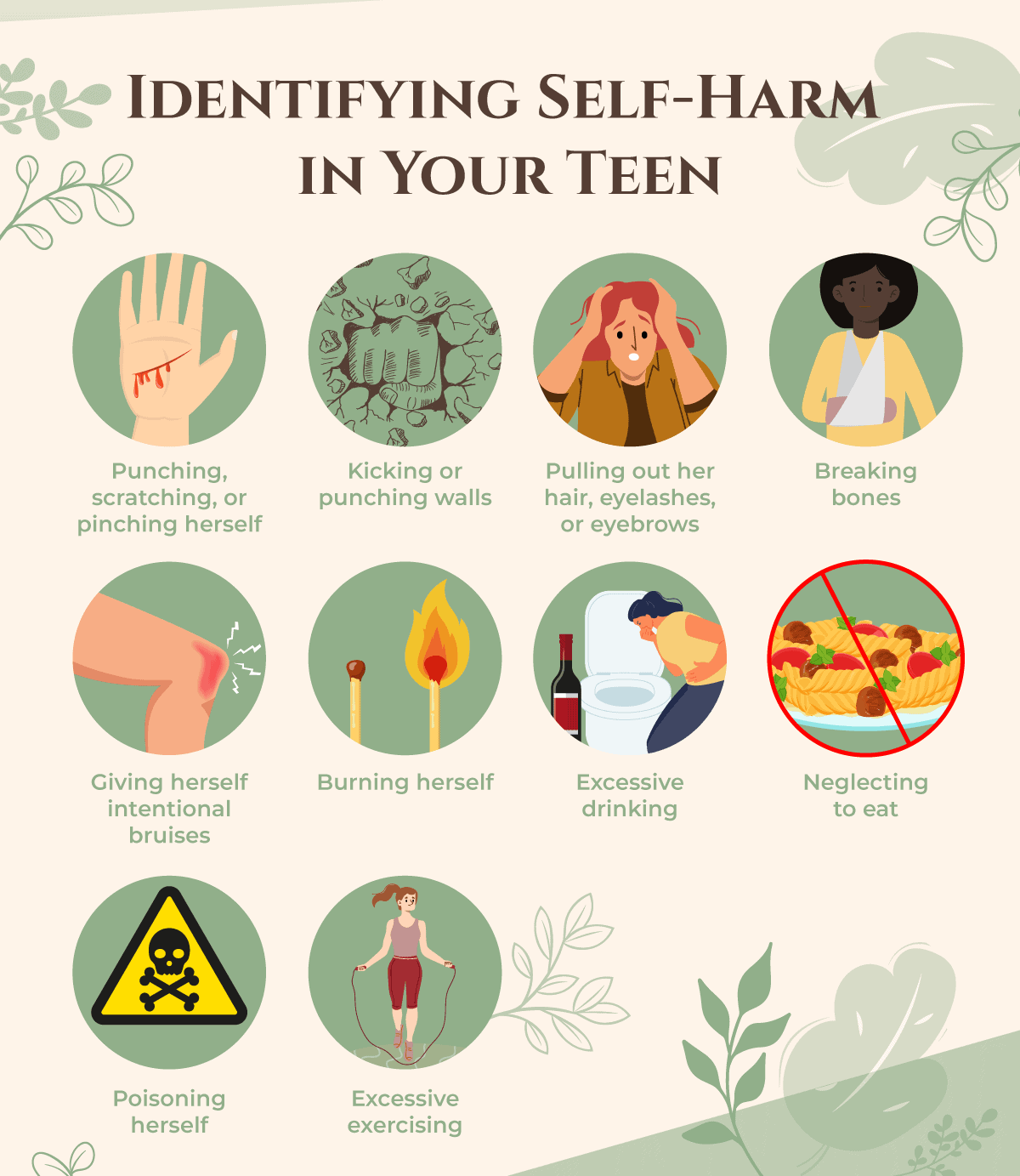
Types of Self Harm Roots Renewal Ranch

Counseling Services / Self Harm

SelfHarm Relapse When Dangerous Habits Return

SelfInjury Painful Reminders Pamphlet Primo Prevention
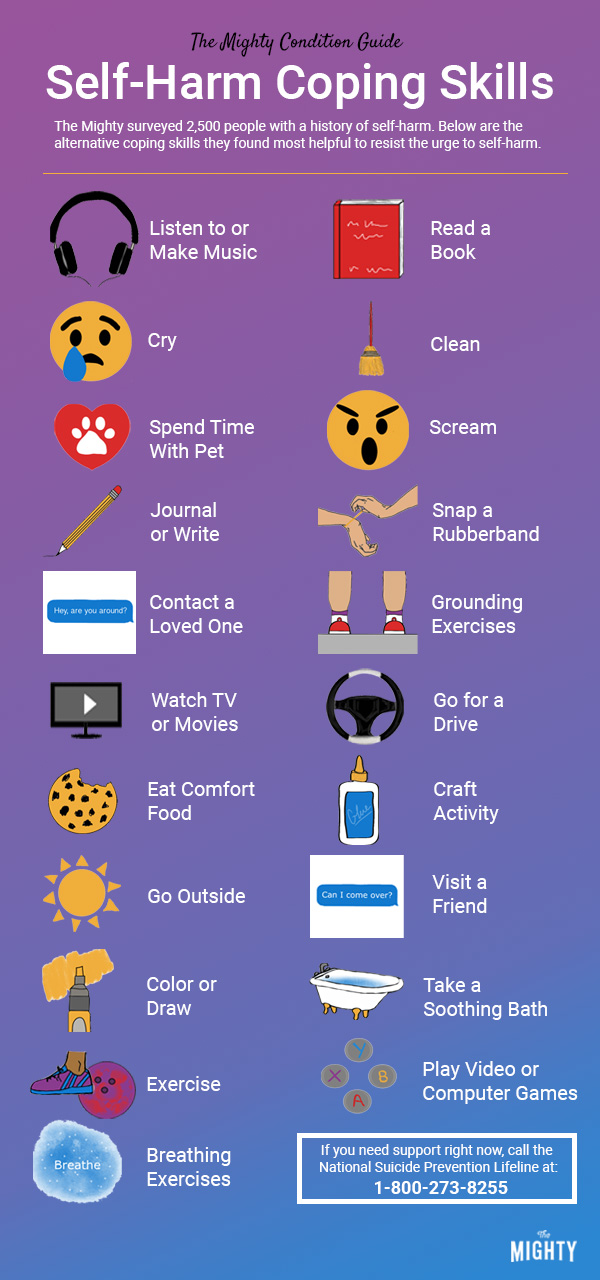
The Cycle of SelfHarming and How to Stop It WTCSB
Parents and Loved Ones How Do You Help a Child Who Is SelfHarming?
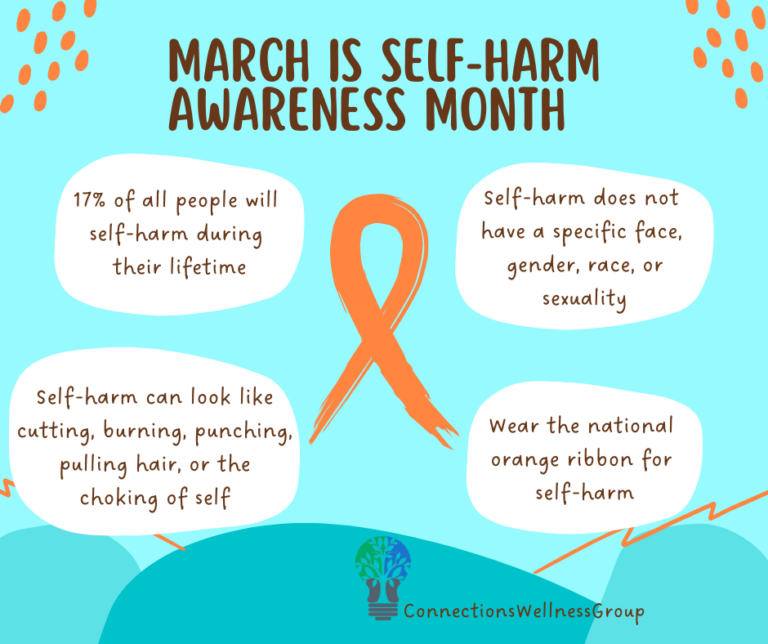
March is SelfHarm Awareness Month Connections Wellness Group

Social Story SelfHarm Making Safe & Healthy Choices Teaching
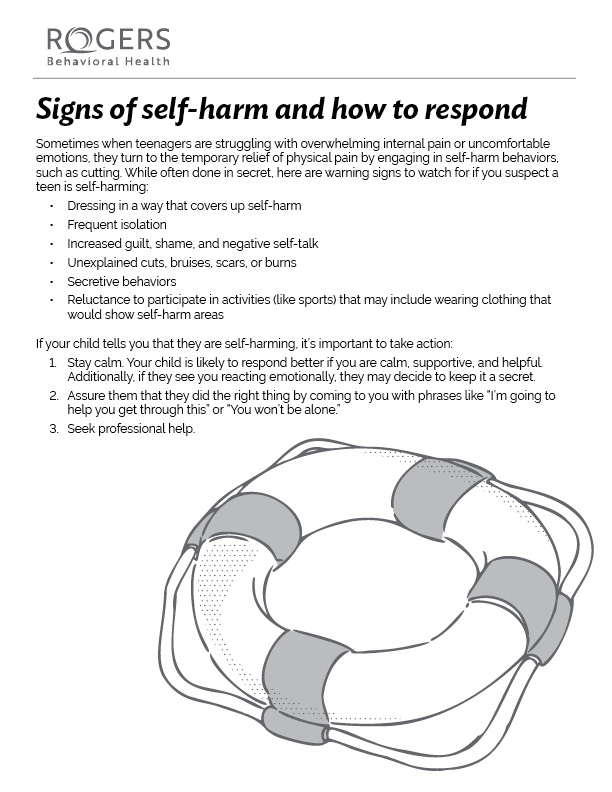
Signs of selfharm and how to respond Rogers Behavioral Health
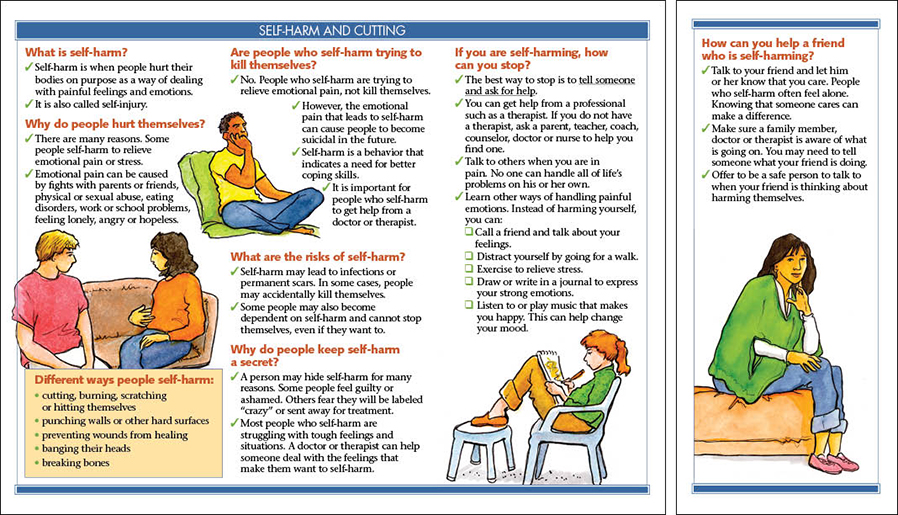
SelfHarm and
• Feeling Overwhelmed • Feeling Angry • Feeling Sad And Alone • Extreme Anxiety.
Download The Guide For Free.
The Person Needs To Find A Less Harmful Way Of Coping.
The Purpose Is Not To Condone Or Encourage You To Hurt Yourself, But To Help You To Stay.
Related Post: